Poughill Church History of St Olafs Church Poughill Cornwall - St Olave Church, in Poughill
|
 |
 |
|
St Olafs Church Poughill Cornwall History of Poughill Church A History of Poughill's Church in Cornwall |
|
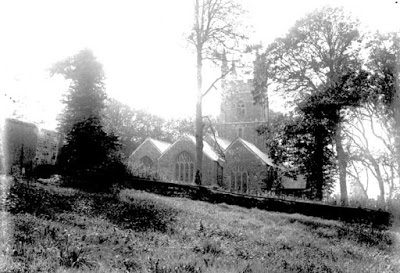
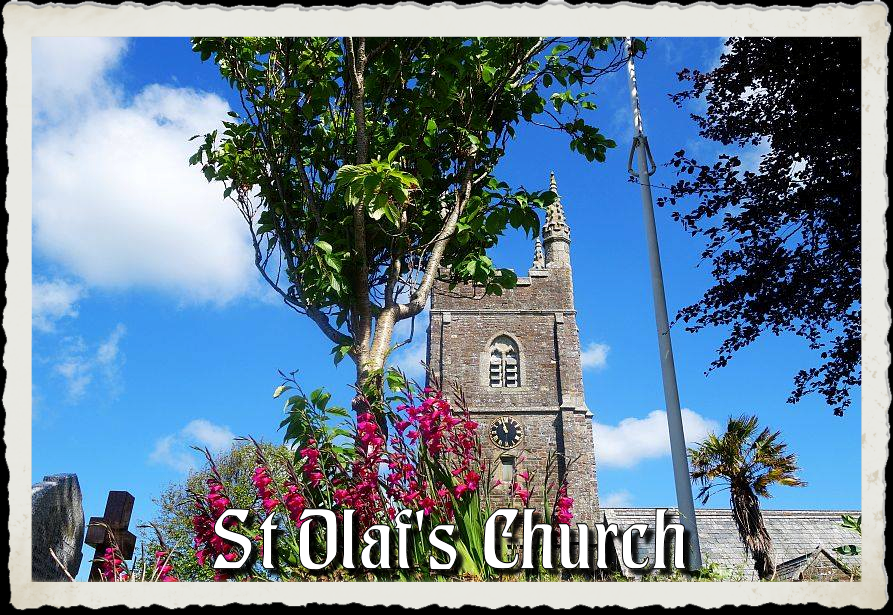
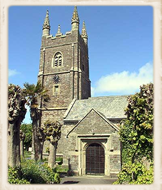
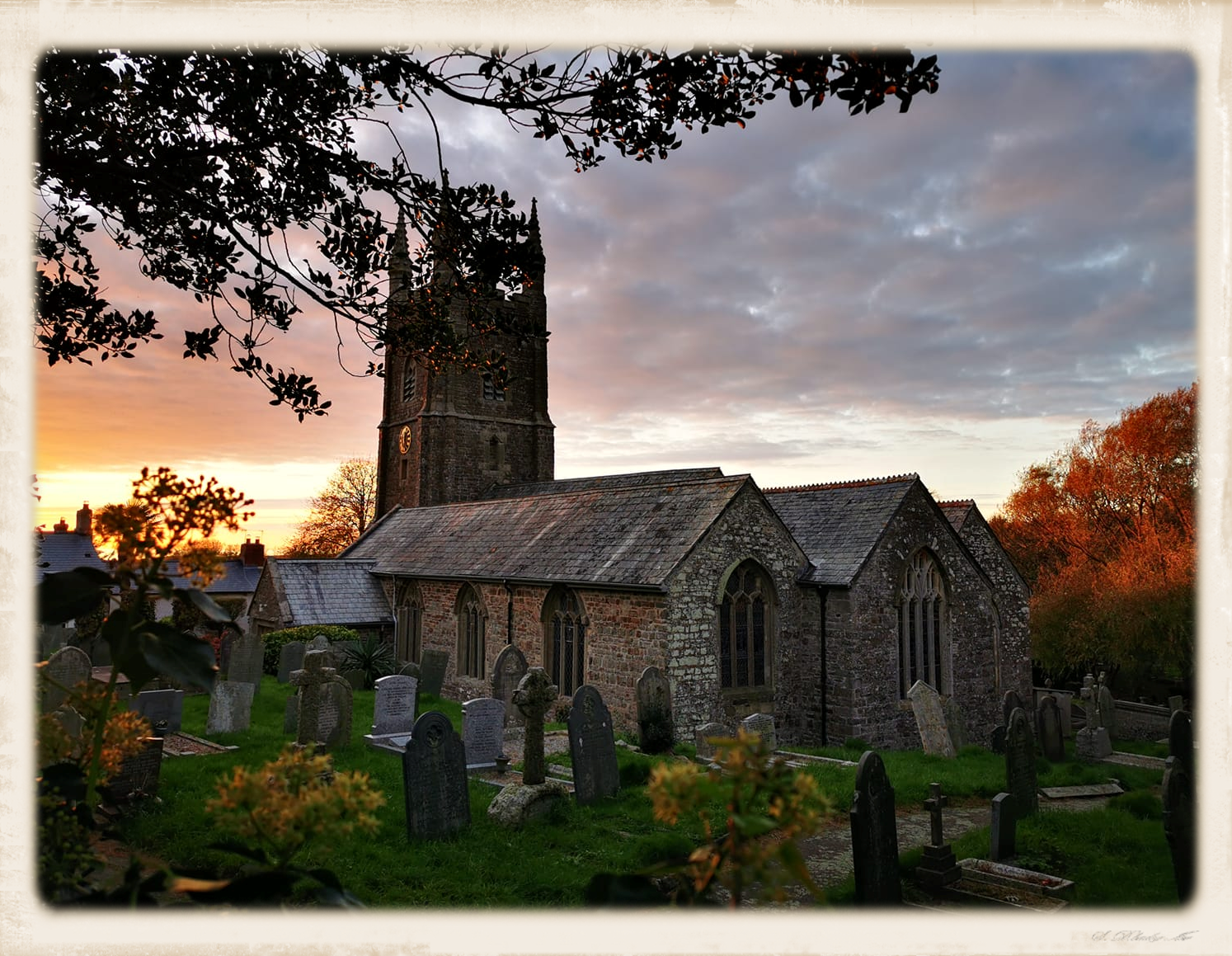
. The dominating feature of Poughill village has to be the fine sixty one foot, great granite bell tower of St. Olaf's church, holding its peel of six bells, but built a century later than the church which is constructed of traditional granite and Caen stone. The church tower itself has four very distinctive crocketted pinnacles and a fine black faced chiming clock, donated to the church in memory of Sir Goldsworthy Gurney, the eminent scientist and inventor who retired to Pougill after suffering a debilitating stroke. The clock was a gift donated to the church by his daughter Anna Jane in 1889.
|
||
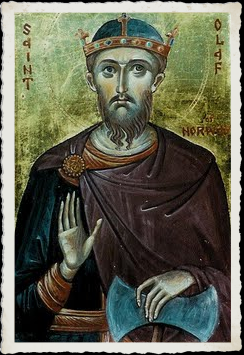
Olaf, the King & Martyr, is known severally as Holy King Olaf and more accurately as Olaf II Haraldsson (Born in the year 995 – 29 July 1030) He is also revered as Norway’s Eternal King and Patron Saint. Historically King Olaf unified Norway, establishing peace and security for his people and laying the foundations for government. With the help of English missionaries, he was successful in making Norway Christian, but in so doing, outlawed all other faiths. This became exasperating for many of the mighty clans who allied and rose up against him and rebelled. |
St Olaf |
|
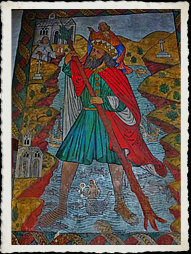 |
Poughills' Church Treasures; The St. Christopher Wall Paintings In Poughill Church
|
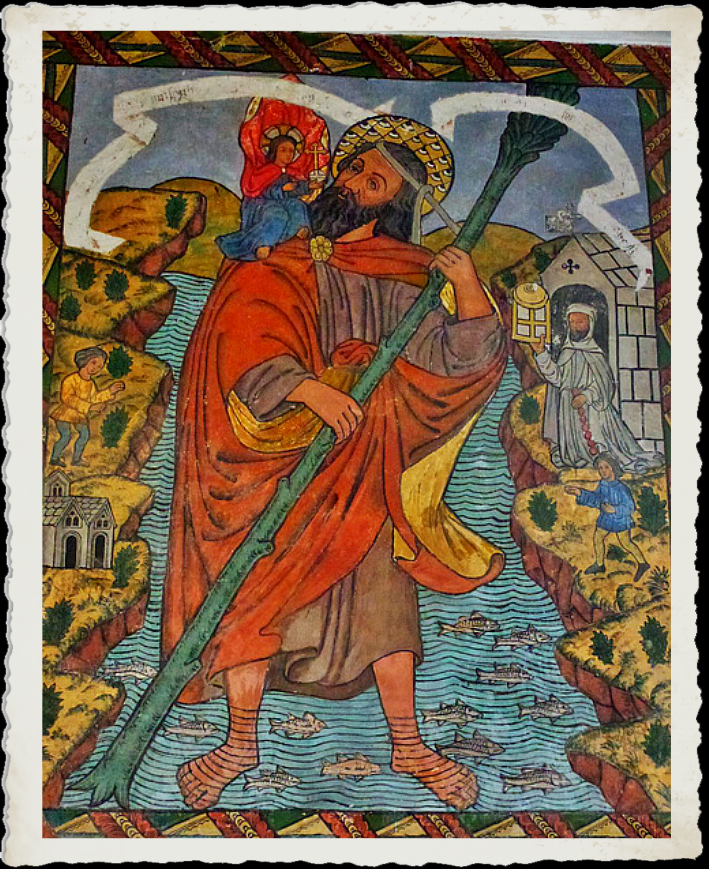 |
| St Christopher fresco in St Olafs church Poughill Cornwall | St Christopher fresco Poughil church Cornwall |
|
In 1894, two large frescoes, dating from about 1450 and long hidden beneath the lime wash covering the walls of Poughills' church, were discovered facing each other across the nave. Although commonly found in places of worship, wall paintings such as these were 'washed out' at the time of the Reformation, as was recorded in Poughill's own historical accounts of 1550.
By the time that Edward VI came to the throne in 1547, following the death of his father King Henry the VIII, the protestant reformists, whose view was that wall paintings were heathen and part of superstitious idol worship, demanded their destruction, as they were in favour of the written word. At that volatile time, the reformists were known to physically attack places of worship that retained such items and defaced their statues, smashed stained glass windows and gouged out paintings on the plaster walls. So with a real fear of an attack on the church in Poughill ever present, Poughill's own highly regarded paintings were simply camouflaged, rather than being risked. However, now they are saved for posterity, having been restored to a former glory. But there was a mistake made at the time with one of the frescoes at Poughill. Mistakenly one of the images of Saint Christopher was thought to be that of King Olaf and subsequently a crown was added.
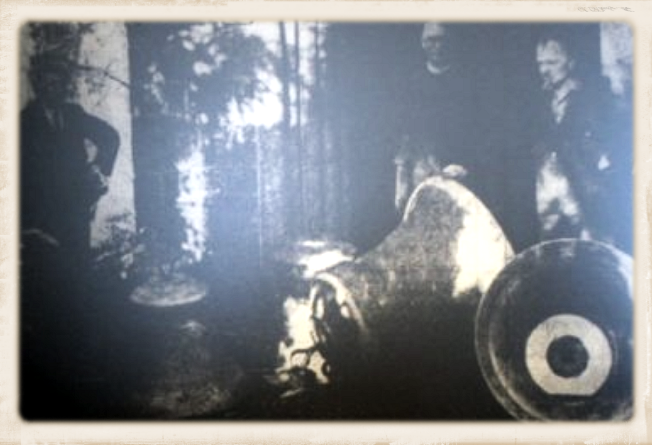
The photograph below shows Frank Owen Salisbury (1874-1962) who was an English artist best known for his portraits and very large-scale paintings of ceremonial events. He is seen at St. Olaf's church restoring the crowned fresco. He spent a week repainting them entirely. The photograph was published in the Daily Telegraph on the 17th of October 1953. How the Reverend Sydney Walter Drewer (1886 - 1971) the Vicar of Poughill from 1950 to 1959 persuaded him to undertake the work is a mystery, but the artist gave his time freely for the people of Poughill.
Frank Salisbury Restoring Poughill Church's frescoes in 1953
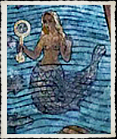
A fairly common depiction in wall paintings of the time was that of St. Christopher, the patron Saint of travellers and the subject of both of St. Olaf's own frescoes. Rare however, is the fact that in one of the Poughill St. Christophers, the original artist has included in it the image of a mermaid. Traditionally a long held superstition of seafarers and Poughill's mermaid is only one of three that are known to exist in paintings of this kind in Cornwall. However and a coincidence worthy of note, is that in Bolzano in northern Italy, there is a cathedral where a similar fresco of St. Christopher, painted in medieval times appears. It also has a mermaid with a mirror, combing her hair and sitting on a rock in the water between his feet.
It is also worthy of note that St. Olaf's near cousin at Launcells, St. Swithin's church, there are remnants of an old Tudor wall painting too and that they also have remarkable carved bench ends on their pews, very similar indeed to St. Olaf's own fine examples.
|
||


Poughill's Carved Oak Bench Ends
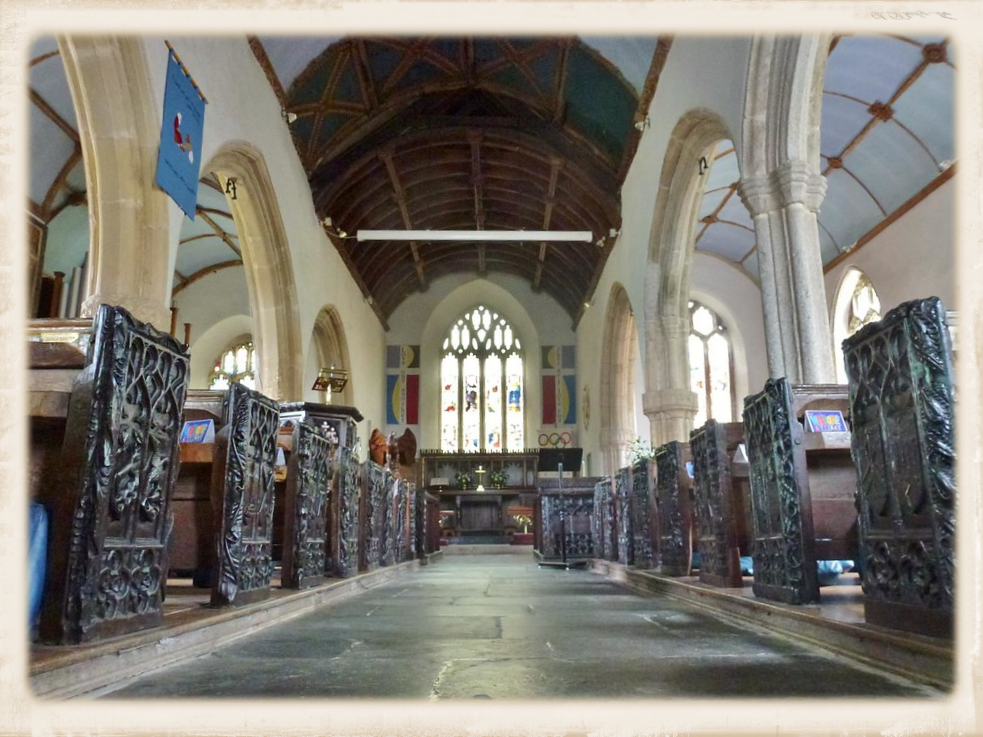
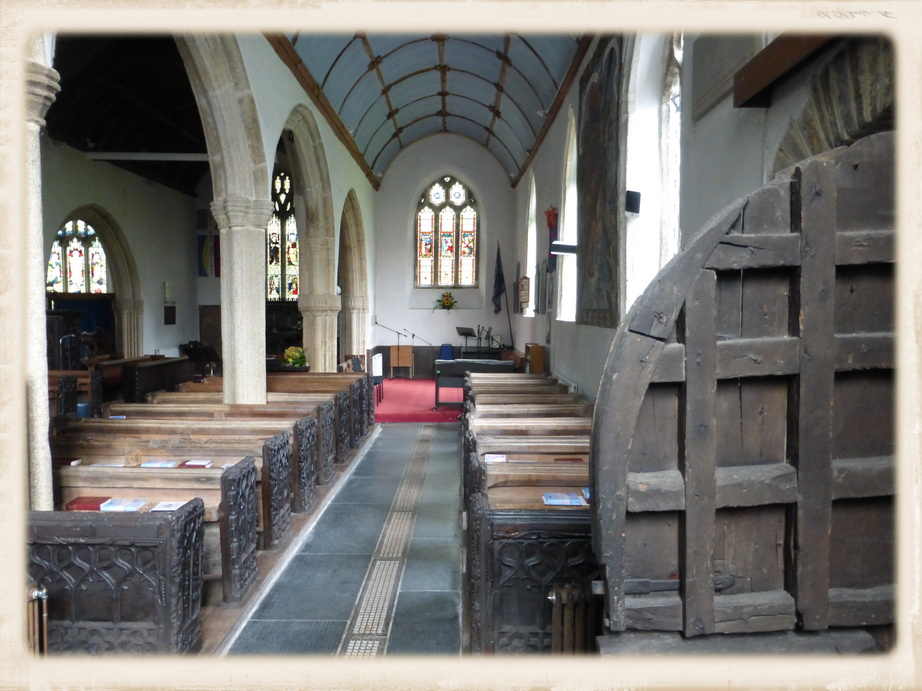
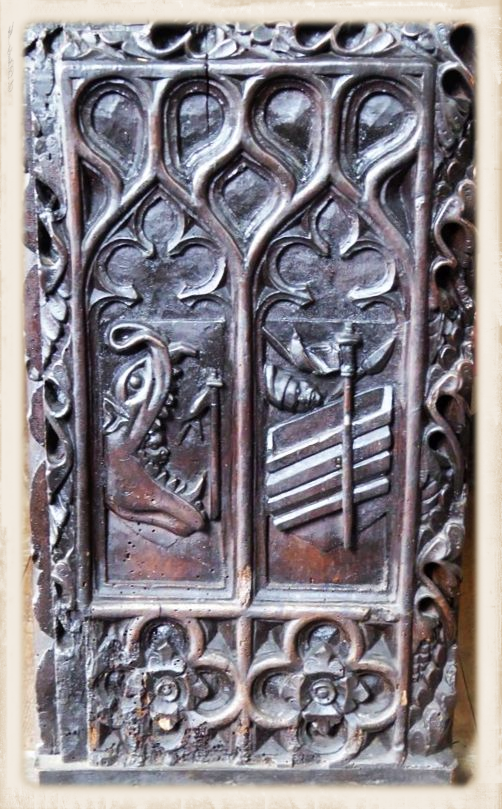
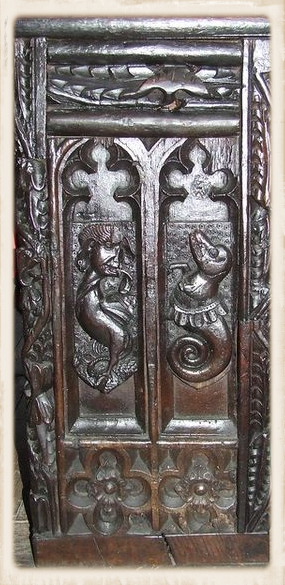
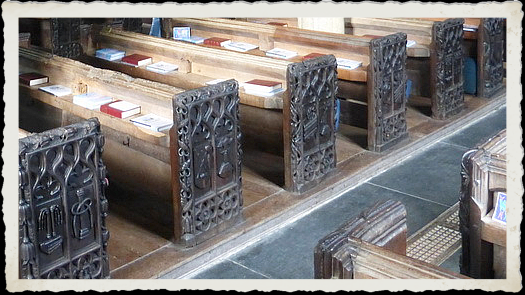
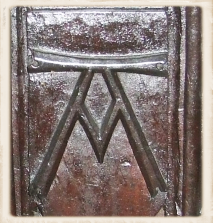
It's believed that these 78 wonderful oak carvings based on the Passion of Christ, including various emblems of the Crucifixion, armorial insignia, symbols and initials, are probably the work of one elusive and yet still anonymous man. A wood carver and craftsman known today only as 'Master A'. Many wood carvers of the period, employed to make rood screens and bench ends in churches, incorporated their names into their work, others didn't, but are actually named in church records and appear in contracts they signed at the time. But some of these mysterious artisans have not yet been identified, as has not Poughills silent hand. Incorporated into Poughill's pew bench ends, you will find a single clue to the creators identity in the form of a stylised letter A and it is quite distinct, as are other stylistic features and symbols which cannot be ignored, because they also appear in Launcells.
|
||
 |
|
 |
One thing for certain is that we are able to pinpoint much more closely, when these oak bench ends were actually created. |
||
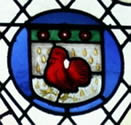
Arms of Launceston Priory In Stained Glass window St Stephens by Launceston |
|
Arms of Launceston Priory |
We can narrow it down because one of the bench ends at St. Olaf's church, prominently sited in the front row of the North aisle, is decorated with the arms of Launceston Priory, symbolised by a cockerel with a background of corn sheaths under three roses and the priory was dissolved in 1539. So it is fair to say that the bench ends were almost certainly created sometime at the beginning of the sixteenth century. |
||
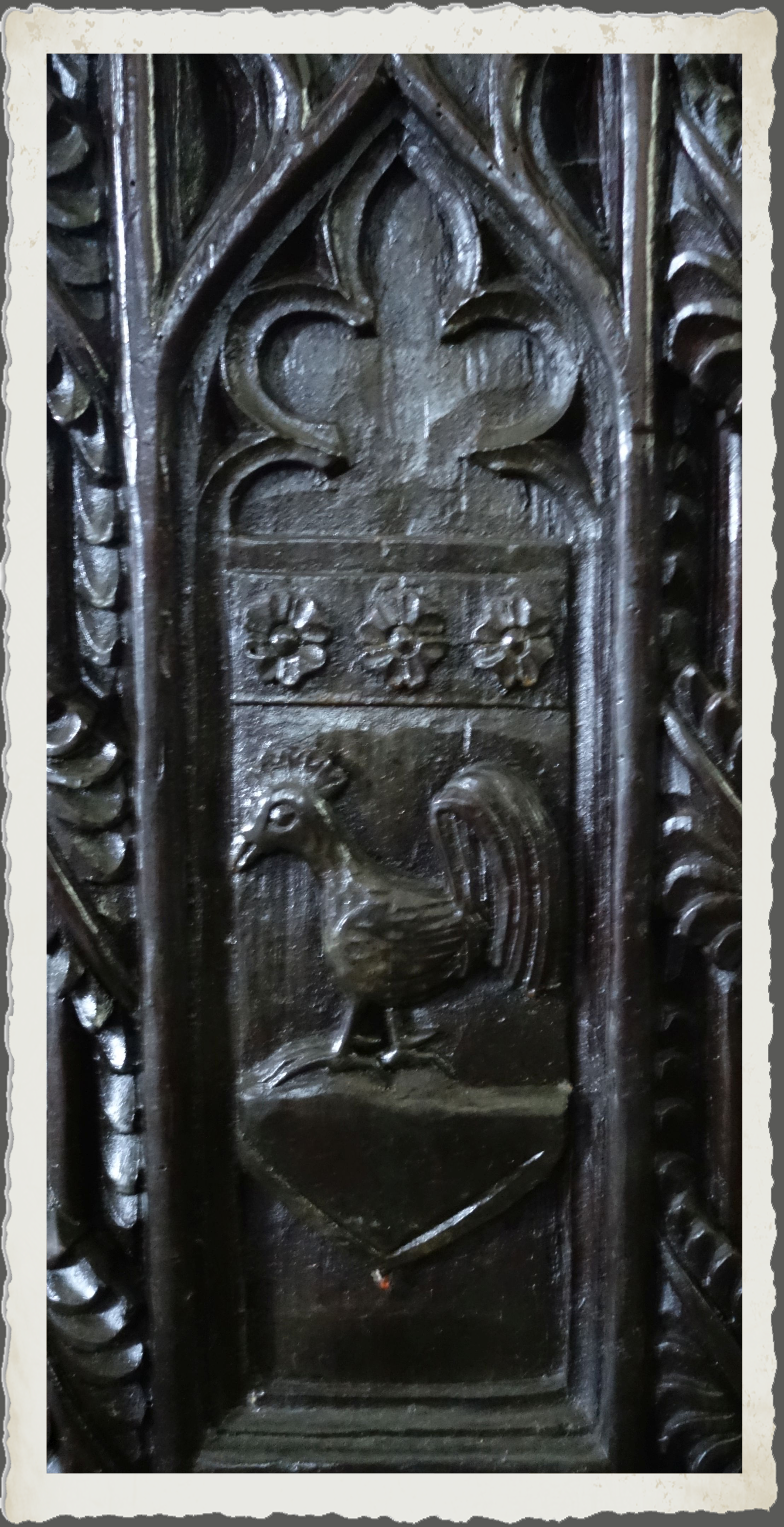
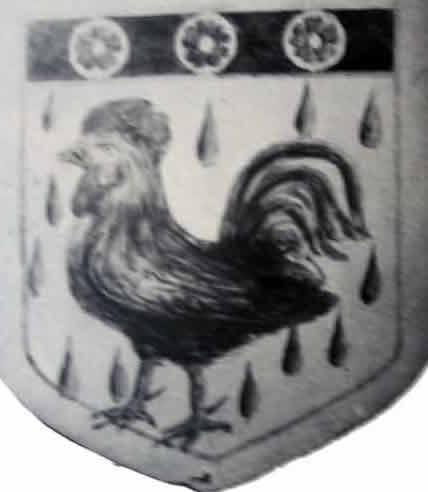
|
||
Early Font outside St Olafs |
Poughill Church Font
|
Porch Water Stoop |
A further treasure to be found at St. Olaf's, is the Romanesque arcaded font which is carved from Greenstone and locked in the tower. Greenstone is a hard rock that early cultures mainly used for fashioning jewellery and statuettes. Interestingly it is a rock that is not commonly found in Britain, but is in Sweden, perhaps pointing us towards our Saxon roots once more. Yet items carved from it, such as the font, are common to north Cornwall, according to E. H. Sedding, who wrote a book called 'Norman architecture in Cornwall; a handbook to old Cornish ecclesiastical architecture, in 1909' and an expert who dated the font from around 1160. Were this to be so, with the Doomsday survey which was completed in 1086 not mentioning the church at all, could it be that this is a functional relic of the current churches predecessor? |
||
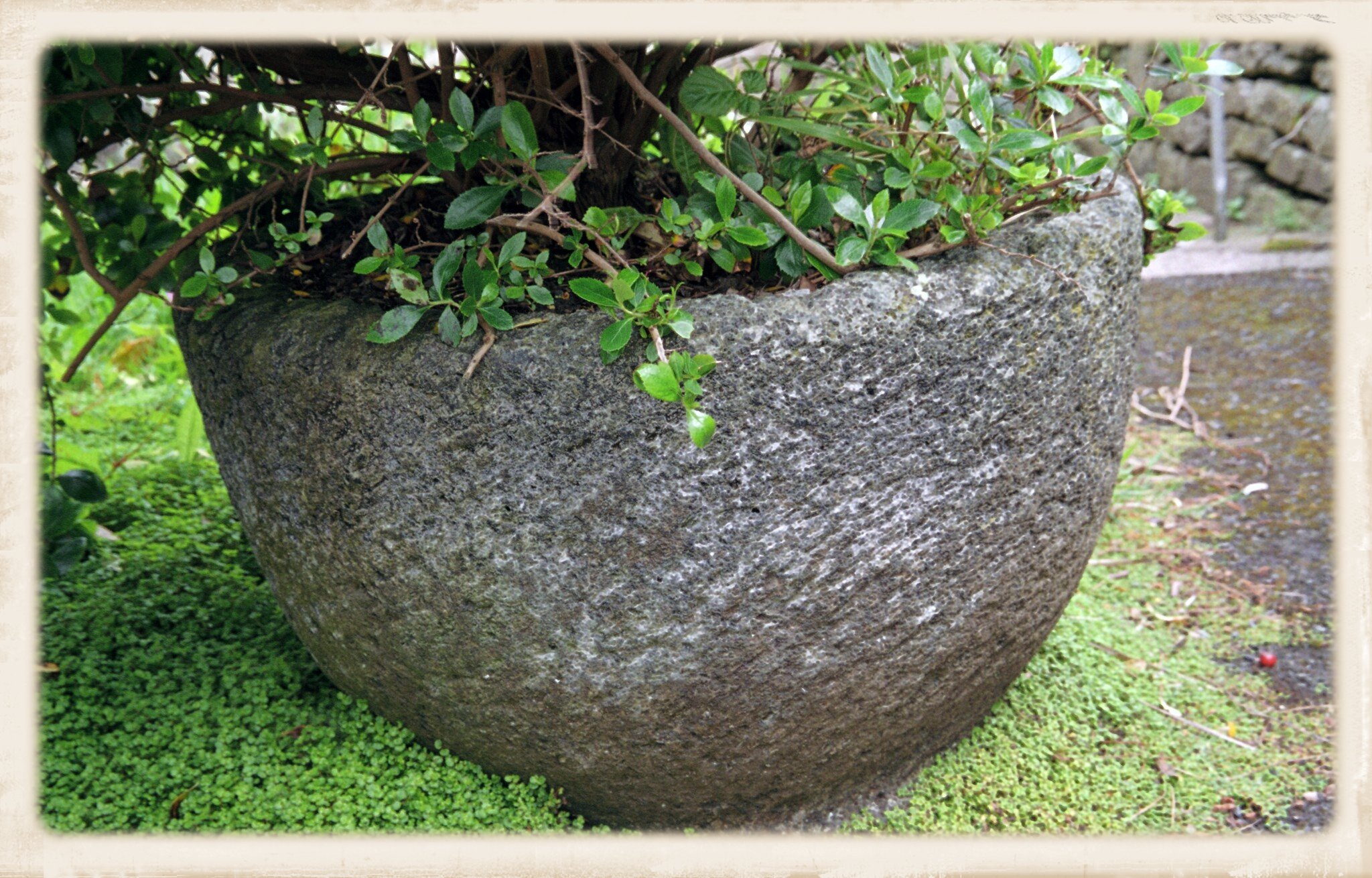
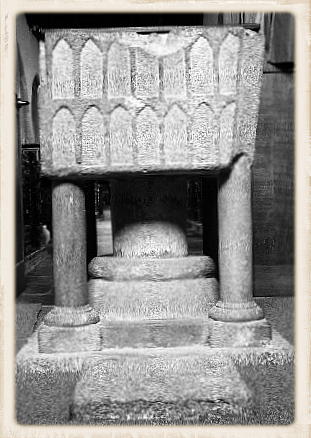
|
||
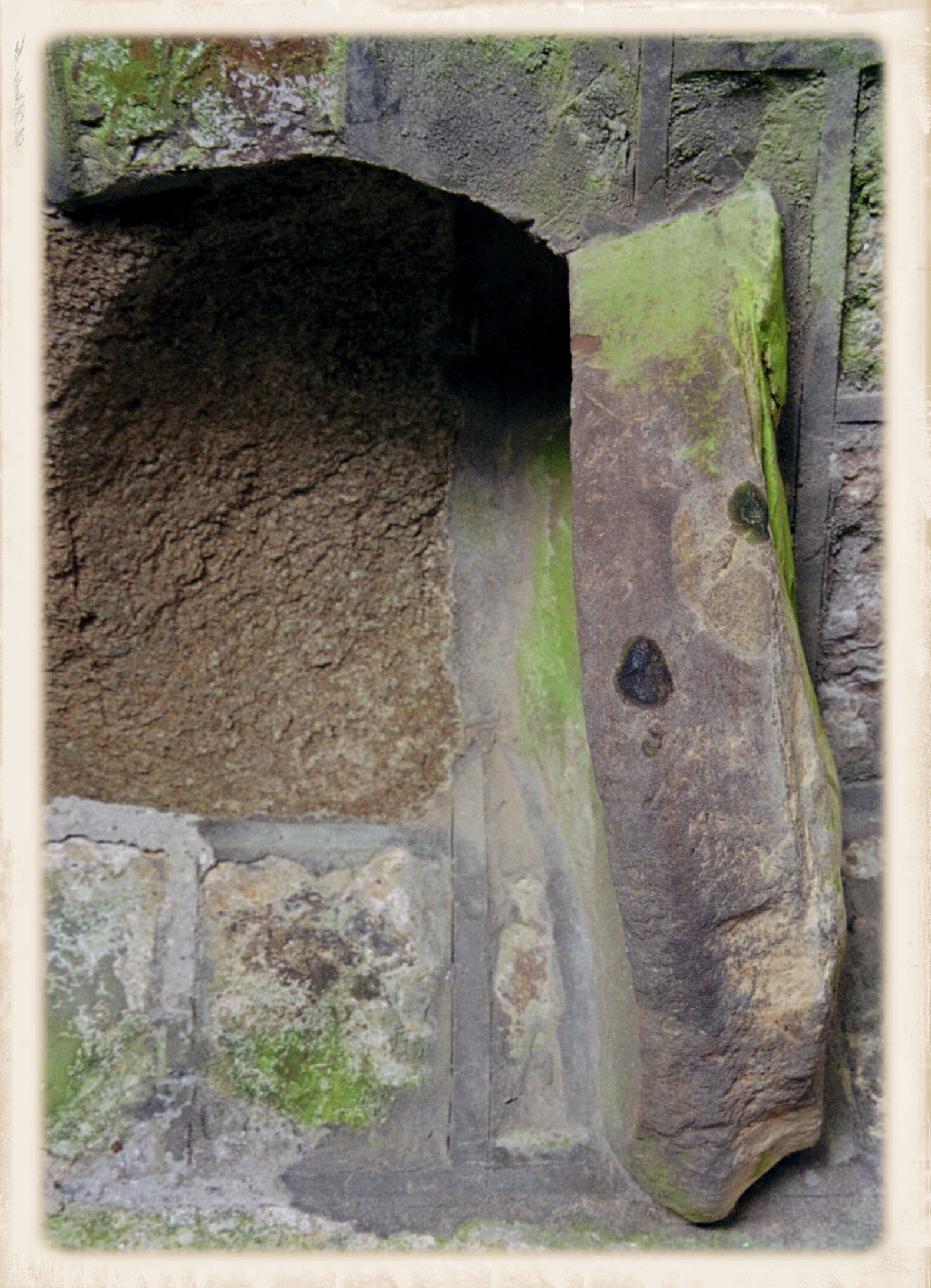
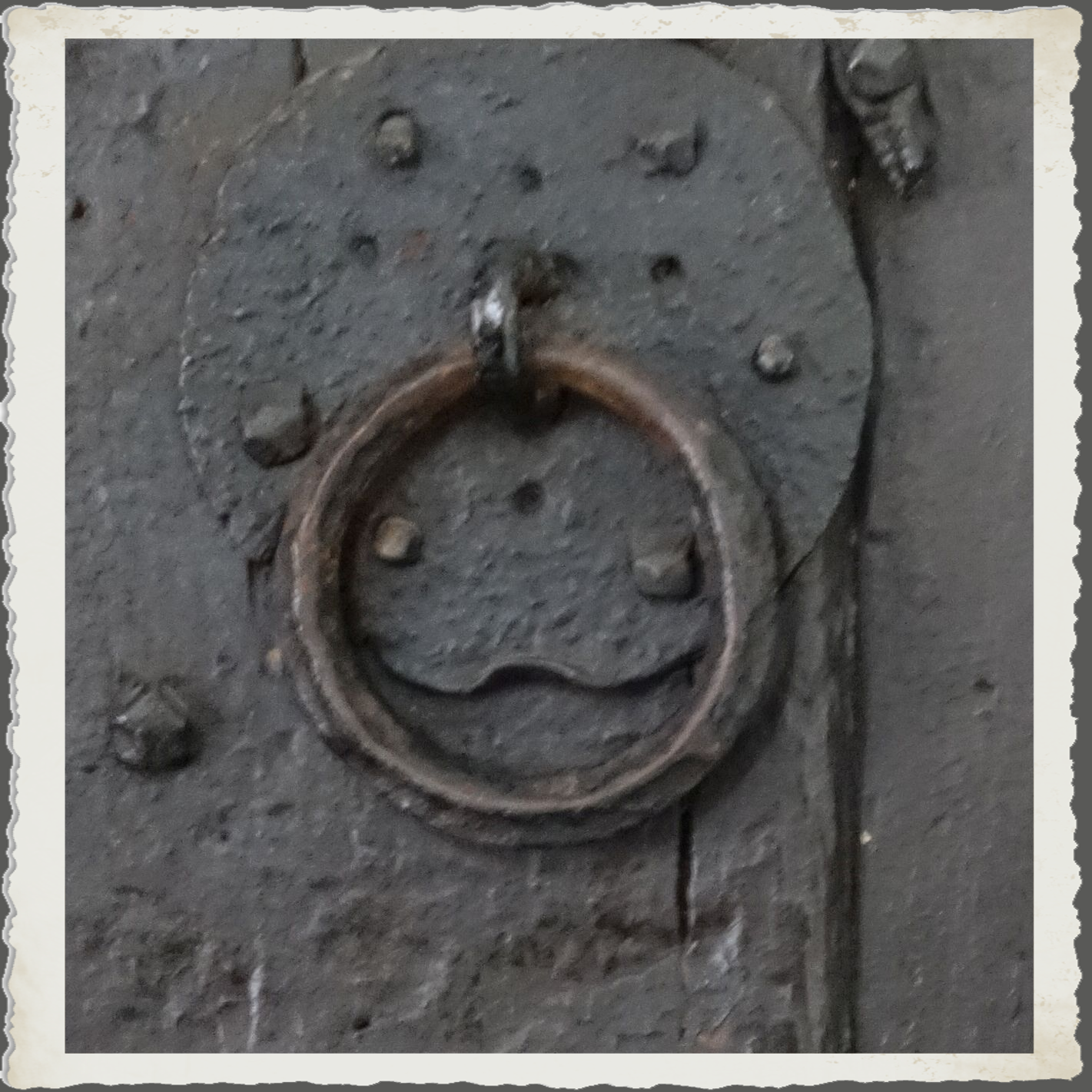
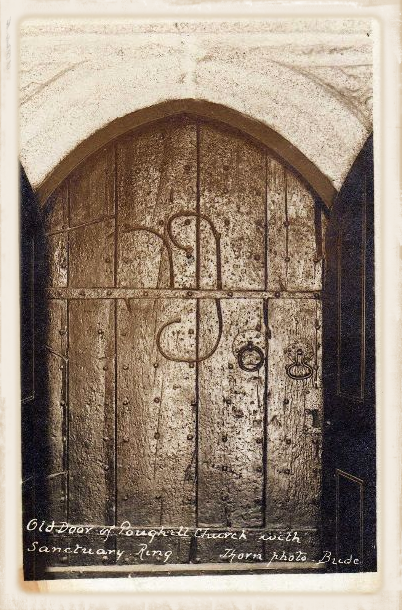
Poughill Church sanctuary knocker
|
Poughill Church Door : Photo Thorn Bude |
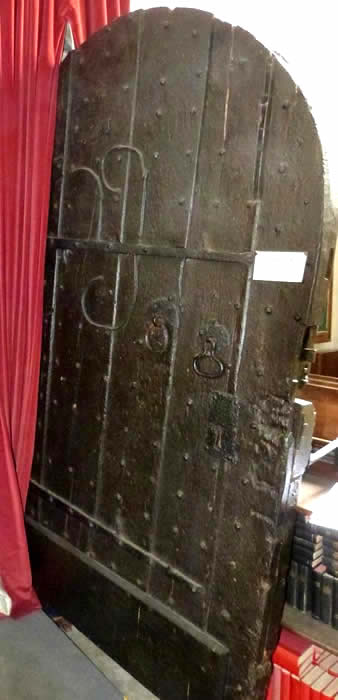 |
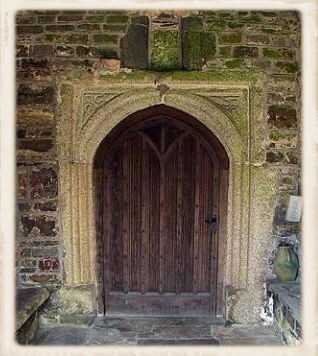
The fine studded oak medieval south door of St Olaf's church, still retains its original sanctuary ring and large wooden lock but is now protected by a newer modern oak door dating from 1971. A sanctuary ring is simply a door knocker and was a large hewn metal ring attached to the door of a church by which any fugitive from the law had only to touch the knocker in order to claim the right of sanctuary in the holy place. This action allowed him to stay in the church, free from menace or prosecution, for a fixed period of some 40 days. But this was abolished in the early 17th century.
|
||
|
||
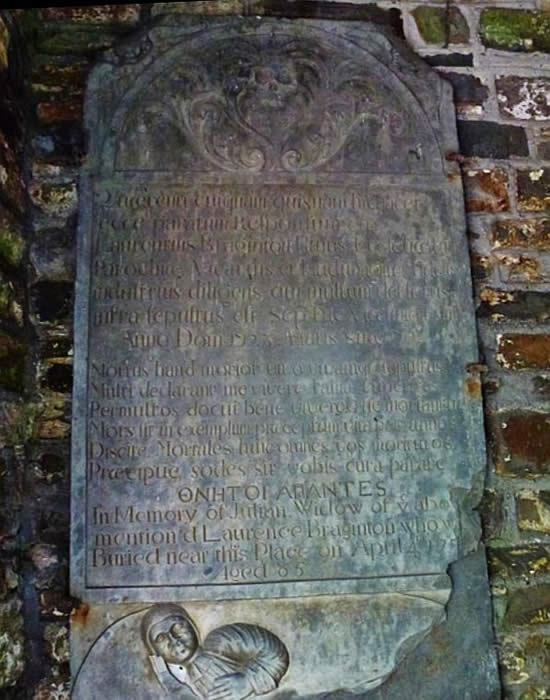
Memorial to Lawrence Braginton |
In the porch of Poughill church is a memorial to Lawrence Braginton, the vicar of St Olaf's church for 46 years between 1677 and 1723.
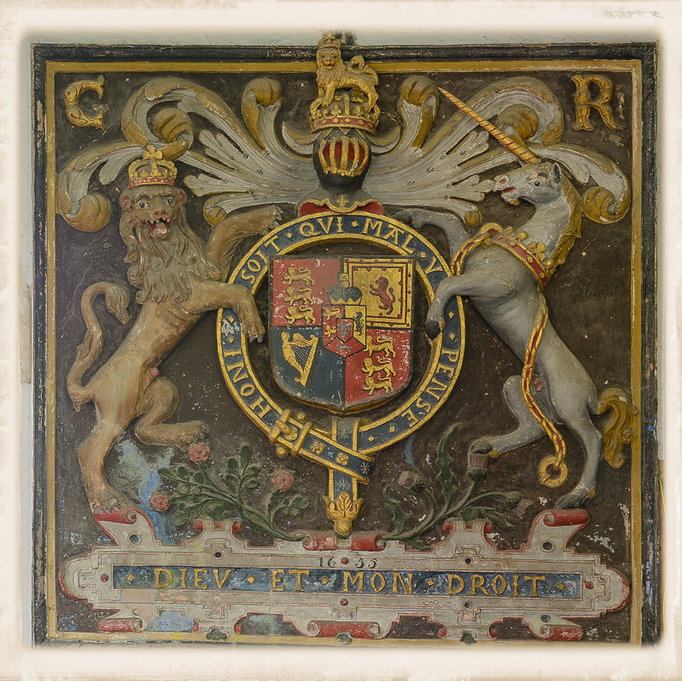
It was sculpted by a man called Michael Chuke of Kilkhampton, who was the son of a London carver extensively employed at John Grenville Lord Bath’s mansion at Stowe, Kilkhampton. As a young man Michael Chuke was sent to London to train under the master carver Grinling Gibbons, the most famous English wood carver of all time. Creating works for Windsor Castle, Hampton Court Palace and St. Paul's Cathedral. Like his father he was also to work at Stowe, creating a fine pulpit for the chapel and has been confirmed as the maker of the Royal Arms in the churches of Launcells, Kilkhampton, Stratton and Marhamchurch, which date from the reign of Charles II. It is entirely conceivable therefore, that Michael Chuke was likewise responsible for creating the Royal Arms which is above the north aisle of St Olafs church in Poughill too.
|
Royal Arms |
 |
||
The St.Olaf - Poughill Church Guilds:
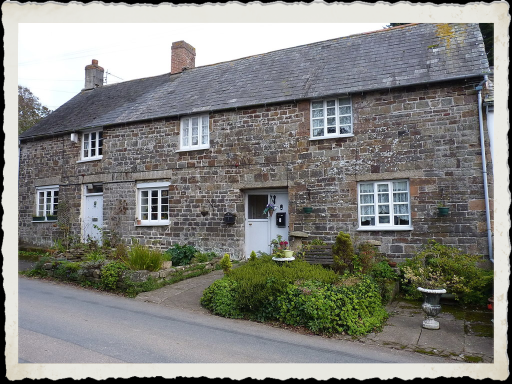
From 1520 on, the church of St. Olaf King and Martyr in Poughill had at least five guilds. The Poughill brotherhood having a joint dedication of Saint Apollonia and our Lady, Saint Christopher, St. Olaf and Christ. It is unclear what each achieved or accomplished, but the building of Church House was no doubt critical to their success. In 1525, William Dovill, the Abbot of Cleeve who administered the manor of Poughill which they then owned, gave the land on which Church house was to be built, sited directly over the road from the church. Under one condition, that it would be used to erect a Guild house. This would accommodate both the poor of the village and those considered unable to look after themselves. Not only did it do that, but it also had a working bakery and housed a small brewery, producing ale for the community and in turn raising money for the church. Unusually built entirely of stone and not of cob and thatch as most of Poughills buildings were, it most probably served as a meeting place for the parish guilds and as a venue for ‘Church Ales’, which were gatherings to raise money for the church, Poughills poor residents and for the annual Revel which has ancient traditional roots. The local Parish 'church house' in towns and villages was also a typical venue for special performances of plays by touring troupes in the South West, so it is possible that Poughill's church house might have been the performance venue referred to in 1550. The players were called interlude players, who were called in to give more dramatic effect when scenery was not being used in a play.
|
 |
||
Church House opposite St Olaf's church, Poughill ll |
||
Record also has it that in 1601, the whole eastern part of the Church House building collapsed and it had to be rebuilt. Today it still stands, converted into to two protected grade 2 listed cottages. |
||
|
||
| Next Page - Poughill's Historic Buildings - ( Full Menu Below the following Photos of St Olafs - Poughill) | ||
| *IMAGES OF ST. OLAFS CHURCH POUGHILL* | |
St. Olaf's Church at Poughill c.1890 |
St. Olaf's Church at Poughill today © 2019 Jackie Freeman |
 |
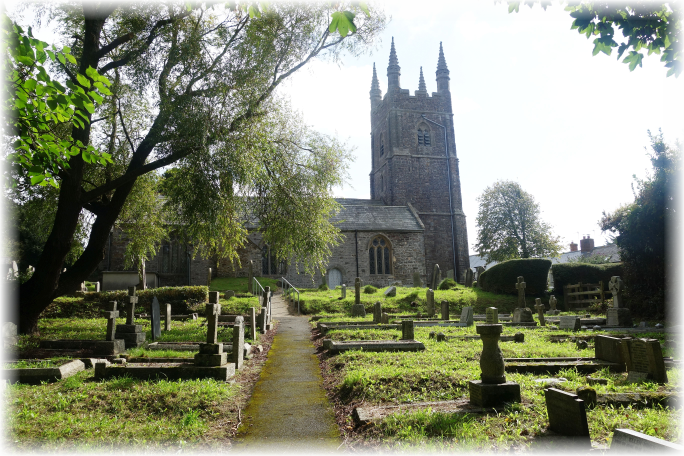 |
| St Olafs Church Poughill © 2019 Yvonne Bailey | ^St. Olaf's Church yard at Poughill today. © 2019 Jackie Freeman |
 |
 |
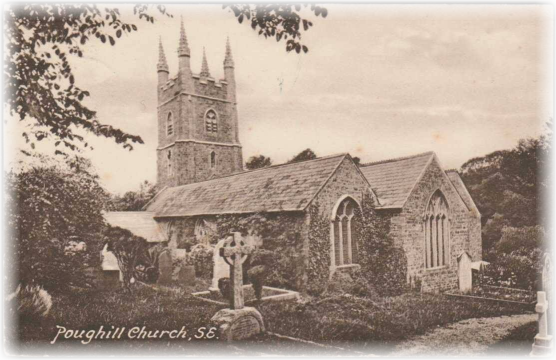
^ 1920 Post Card St. Olaf's Church at Poughill |
^St. Olaf's Church at Poughill vintage Post Card |
|
|
Poughill Church bell ringers. Third from the right is Harold Brooks from Crockwood Farm. Reg Wapshire behind him. The Vicar is the Rev L H Keenan, Vicar of St Olafs 1978-80 and well liked Irishman with a keen sense of humour I am told.
|
|
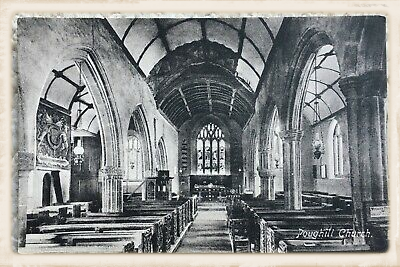
Cornwall, Poughill Church Interior. |
|
 |
^ Above is an interesting photo of the church, though a little blurred though I'm afraid.
For the purist campanologists, from the Latin campana, "bell" the 6 bells are: 12-3-26 (660)kg. in F#
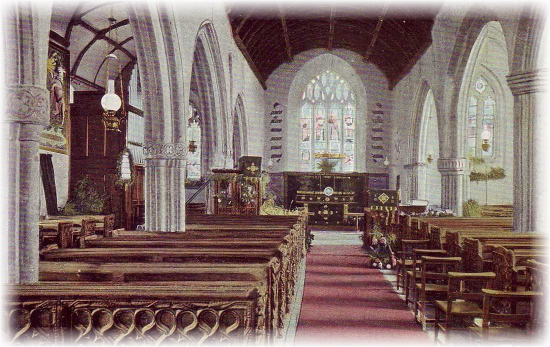
<Old Post card showing the inside Poughill Church |
Poughill Churches carved oak pew ends
|
East aisle |
 |
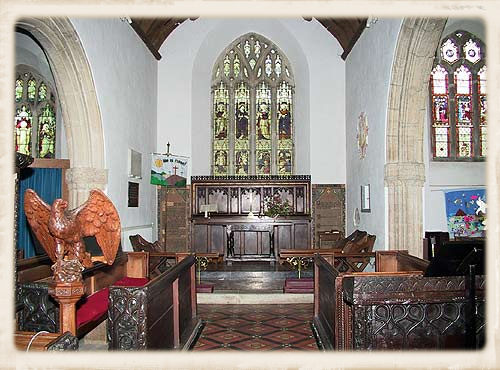
Chancell
|
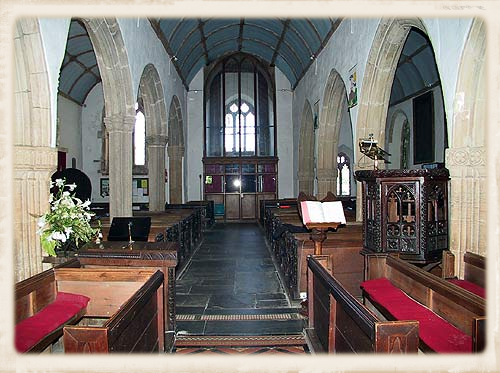
Poughiull Church West End |
Poughill Church Porch |
|