|
|
A look back at the History of Celebrations in Cornwall |
|
Feasts, Saints Days, Fairs, Bazars, Cuckoo fairs, Revels, Festivals and other events
Traditionally, there have been two main types of Celebrations in the Cornish calendar, apart from the Christian holy days, Easter, Whitsuntide and Christmas and Saints days, which have always been associated with feasting.
Parish feasts though were a celebration instituted by the parochial Church and were taking place in villages all across Cornwall, just like those taking place here in the village of Poughill. Principally were created to celebrate the anniversary of the day set aside to honour the Saint to whom the church was dedicated. In Our Case, St. Olaf.
He was cannonised for introducing that country to Christianity a year after his death in battle. So traditionally, St. Olaf's day here in Poughill was the 29th of July, honouring the day that he died. The choice of that Saint the church is dedicated to is also interesting and may very well point to our earliest Anglo Saxon roots.
But over time, it was realised that with callendar changes, sometimes the Saints day feast interrupted the normal day to day labours of the week. Which when you consider that this part of the year was the season of the harvest, it really was not the best scenario as many would be torn between necessary toil and celebration. So to prevent this from happening in future and quite wisely, it was decreed by the Bishop of the area a celebration was to take place in, that every feast should be celebrated on the Sunday 'after' the saints day.
In time, from their earliest pure Christian times, these feasts, or revels as they were now getting to be known, were gradually devolving into more boysterous events and this offended many puritans who regarded them as a nuissance to public morals. Eventually, following a complaint made by Bishop Laud, the then Archbishop of Canterbury and advisor to the King, the supression law was reversed. His argument being that on these Celebratory Sundays, a Church was far fuller than on any other ordinary Sunday in the year and that revels ''increased friendships and encouraged more unity in the community. Thus resulting in a far better appreciation of charity and bringing more help for the poor of the village.' ( funds to the church! )
|
|
So what about the Poughill Revel and just how old is it ? Well you might be surprised. We know for certain that the earliest 'Poughill Revel' was mentioned as far back as 1525, when William Dovill, the Abbot of Cleeve who administered the manor of Poughill at the time, gave the land over the road from the church for Church house to be built. But he did so under the strict condition that it would be used to erect a Guild house. Partly as a venue for the 'Church Ales’ which were gatherings to raise money for the church and partly for Poughills poor residents. But also for our annual Revel, which was a different kind of celebration back then, in honour of Saint Olaf. So the Poughill Revel, at least by name, has very ancient roots indeed. |
|


|
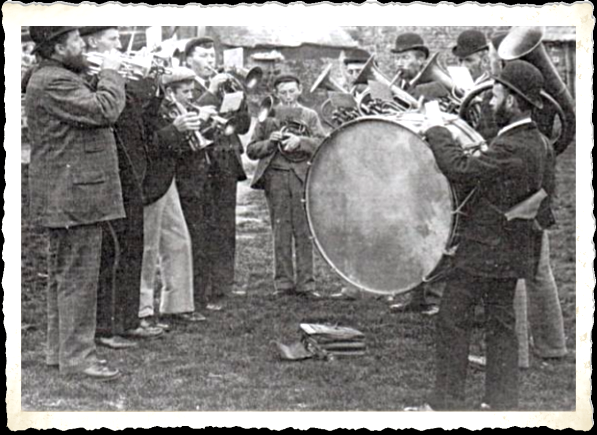
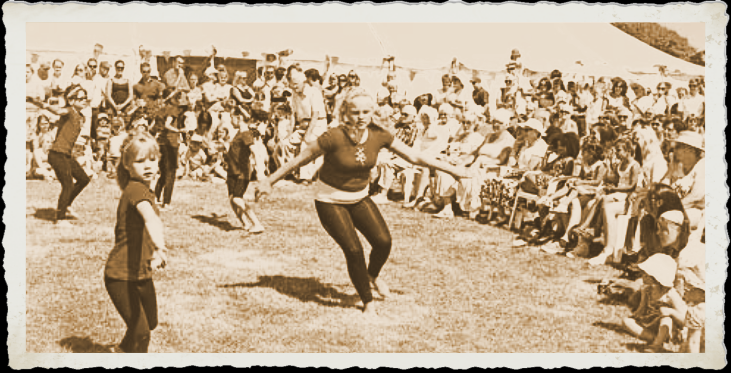
I haven't found many old photographs of the Poughill revel, yet, but those that I have found are interesting. < On the left is a photograph of the very smart looking Morwenstow band performing at the Poughill Revel and Cuckoo Fair in 1939. And below, some young ladies from CJ’s Dance school in Bude entertaining the crowds at the Revel just a few years ago. Picture credit : Paul Hamlyn
And below, two very brave looking super heroes who flew in just for the Poughill Cuckoo fair.
|
 |
|
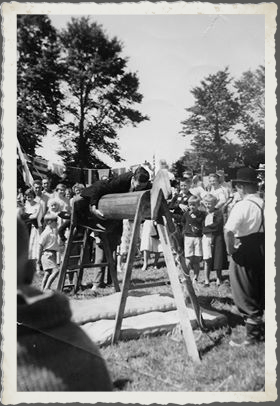
Poughill Revel in about 1956/7. The greasy pole participator is a young Gordon Brooks, now aged 80 Photo courtesy Gordon Brooks. |
|
In the 18th and 19th centuries, Poughill's Revel and Cuckoo Fair became the great event of the year locally in north Cornwall. There were church services, feasting, the inevitable making merry and taking of ale, along with boysterous sporting events such as Cornish hurling and displays taking place on the day. Including a firm favourite, Cornish wrestling. There was archery and hoopla. It would have certainly deviated somewhat from the austere dedicated parish celebration of St. Olaf that it traditionally started out as.
In 1740, the Poughill parish feast day, called Tooleda day, dedicated to St Olaf (Olave) was said to be on Monday August 1st, close to St Olave's day itself which is on the 29th of July. As one of the main events of the calendar, the parishoners made saffron buns, called 'Revel Buns' and there were children processions much singing and dancing, the bells rang all day and the church it is said "would be overflowing into the churchyard."
"In modern times, there are traditional games for all to enjoy, including the coconut shy and hoopla stalls as a part of the Revel. The flower club sold arrangements members had made on the day and there were also cake stalls and bric-a-brac, as well as a refreshment tent and a barbecue." It seems logical that the Poughill Revell it became, with it being close to St.Olafs day and the long held tradition of celebrating the harvest, the two became inevitably intertwined and of one significance. Having a great time and raising funds for charity.
But it also seems likely that we probably had two celebrations annually here in Poughill and both had very different reasons for taking place.
|
|
|
|
|
|

 |
Cuckoo Fairs |
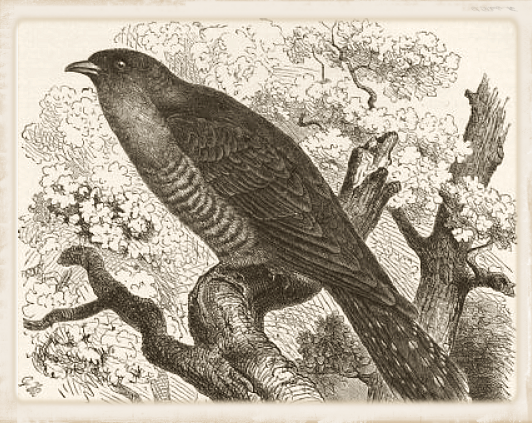 |
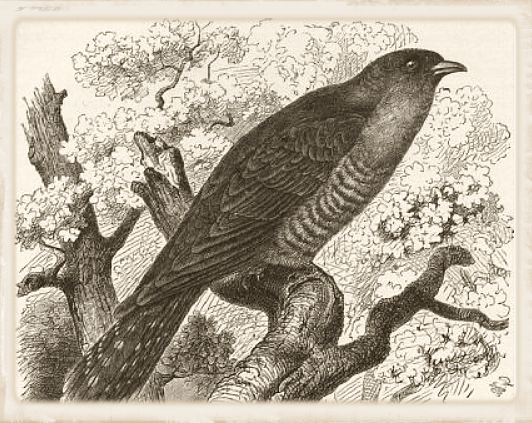
Most English 'Cuckoo Fairs' are consigned today to history, though some do exist in name in different parts of the country and some do have traditional Celtic elements, particularly with the crowning of “the Revel Queen” as its culmination. But far back in time, the local Cuckoo fair was held as a celebration of the advent of Spring, set in place to celebrate the coming of fine and warmer weather, fertility and better prospects for all. And what was chosen to symbolise this event ? Obviously a migratory bird call the cuckoo, who suddenly appears on the scene at just this very time of year.
Cuckoo fairs around the land , were traditionally marked by the physical releasing of a live cuckoo and that action symbolised the beginning of summer and always took place in mid to late April, when the poor confused bird was finally released from captivity either from a basket, a gated enclosure, or a pen where “penning the cuckoo” had taken place to capture the returning bird.
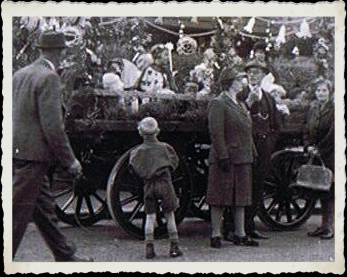
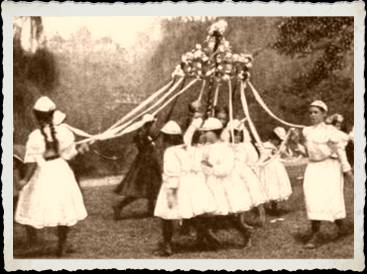
Down through the centuries, May Day has been associated with fun, revelry and perhaps most important of all, fertility. The days festivities would be marked with village folk cavorting round the maypole, the selection of the May Queen and the dancing figure of the Jack-in-the-Green at the head of the procession. A character thought to be a relic from those enlightened days when our ancient ancestors worshipped trees. So there is a remarkable similarity with all these types of celebrations at this time of year.
But one question still remains. Why and when our Poughill Cuckoo Fair celebration and the Saints day Poughill Revel somehow joined up?
|
|
|
|

A list of the different Traditional Festivals occuring in Cornwall
| FEASTS: | ||
|
† = Parish Feast Day - 25 in total |
||
| St Piran's Day † Celbrated throughout Cornwall was originally a miners' holiday now Cornwall's national day 5 March. | ||
| Allantide † - Saint Allan's Day or the Feast of Saint Allan, 31 October | ||
| Golowan † Celebrated throughout Cornwall moreso Penzance Revived in various forms 1920s, 1935, 1990 Around 23 June | ||
| The Montol Festival - Penzance, held on the date of the feast of St Thomas the Apostle, usually the 21st December. | ||
| Mummer's Day, Padstow on Boxing day. | ||
| Madron Feast † Madron, Heamoor & formerly Penzance - St.Maddern | Celebrated the fourth Sunday before Christmas |
|
|
St Just Feast † St Just in Penwith |
Celebrated First Sunday and Monday in November |
|
| Paul Feast † St Pol de Leon, Mousehole and Newlyn | Continuously celebrated Sunday nearest 10 October & week following |
|
| Sennen Feast † St Sennen | Celebrated Advent Sunday |
|
| St Erth Feast † St Erth | Held 31
October |
|
| Ludgvan Feast † Ludgvan - St Paul | Celebrated Monday and Sunday nearest 29 January |
|
| St Hilary Feast † St Hilary, Cornwall | Celebrated in Mid-January |
|
| Davidstow Feast † Davidstow - St.David | Celebrated 1 March |
|
Next Page - The Old Vicarage - ( Full Menu Below ) |
||||||||||||||||||||||||||||||||||||||||||||||||||||||||||||||||||||||||||||||||||||||||||||||||||||||||||||||||||||||||||